
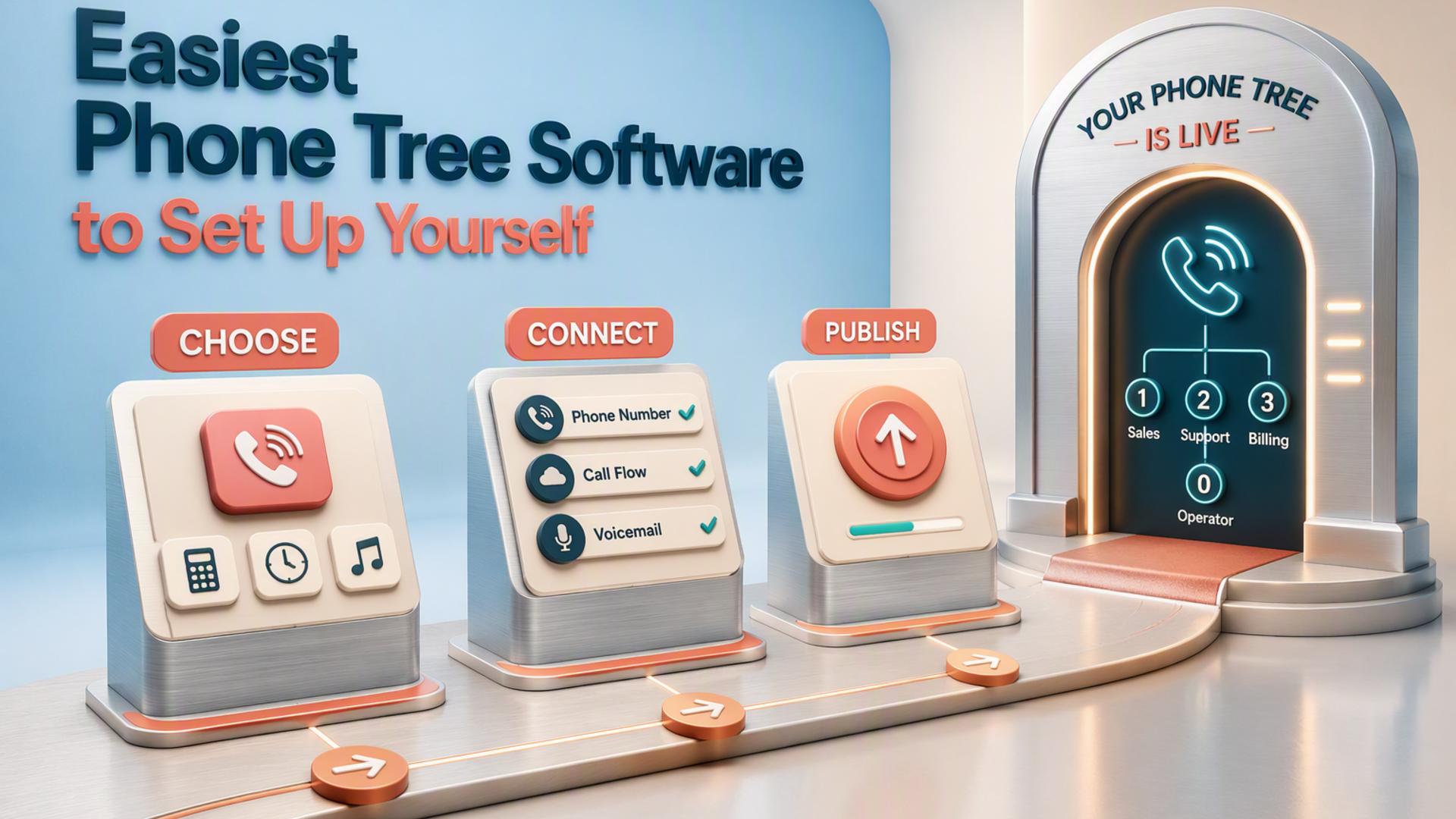
Phone Tree Platforms You Can Launch Without Writing Code
Building a phone tree no longer has to mean hiring a developer, learning a programming language, or spending weeks configuring a complicated communications system. A growing range of platforms now lets businesses automate outbound calls, route responses, collect feedback, and reach large contact lists through dashboards and visual tools.
The right choice depends on how much flexibility your team actually needs. Some platforms focus on getting a straightforward calling workflow live quickly, while others provide broader communications features that may require more setup. The six options below cover both ends of that spectrum, beginning with one of the most accessible choices for teams that want to launch without technical involvement.
1. DialMyCalls
DialMyCalls is particularly well suited to businesses that want to create a phone tree without turning the process into a technical project. The platform is built around a simple self-service workflow, allowing users to upload contacts, prepare a voice message, choose the desired calling features, and launch a campaign from a straightforward dashboard.
Built for Straightforward Self-Service Setup
Rather than asking users to construct call logic from developer-oriented components, DialMyCalls keeps the process focused on practical business communication. Teams can send automated voice broadcasts, use live transfer functionality, collect responses through polling, and manage contact groups without writing code. This makes the platform approachable for office managers, small-business owners, administrators, and other non-technical users.
A Practical Fit for Fast Phone Tree Deployment
Its pay-as-you-go approach also makes DialMyCalls appealing to organizations that may not need a complex communications system running continuously. A business can create an account, import a list, record or type its message, and begin preparing a call campaign without arranging a technical onboarding process.
For teams whose main priority is getting a reliable phone tree working quickly, DialMyCalls offers an especially clean balance of capability and simplicity. It covers the functions most organizations expect from an automated calling system while keeping the technical work behind the scenes, making it the most natural starting point for businesses that specifically want to avoid developer involvement.
2. RingCentral
RingCentral approaches phone trees from the perspective of a broader business communications platform. Its services extend beyond automated calling into areas such as business phone systems, messaging, video meetings, and contact center communications, which can make it attractive to organizations looking to consolidate several communication tools.
Phone Trees Within a Larger Communications System
Businesses can configure call routing and automated menus as part of their overall phone environment. This provides useful flexibility for organizations that need incoming calls directed to different employees, departments, extensions, or destinations according to predefined rules.
Best Suited to Broader Business Phone Requirements
Because RingCentral covers considerably more than basic mass calling, setup can involve decisions about users, extensions, routing rules, business numbers, and organizational structure. These options are useful for companies that want their phone tree integrated into a wider cloud phone system.
For a growing organization already looking for a comprehensive communications platform, this broader scope may be valuable. Teams interested primarily in launching an occasional automated calling tree, however, may find that a more purpose-built platform offers a shorter path from contact list to completed campaign.
3. CallingPost
CallingPost is centered on helping organizations distribute messages to groups of people through voice calls, text messages, and related communication tools. It has traditionally appealed to organizations that need a practical method for reaching members, employees, volunteers, parents, or community groups without individually contacting every recipient.
Group Communication Without Programming
The platform allows users to organize contacts into groups and send messages to those groups without building software themselves. This makes it suitable for routine announcements, schedule changes, reminders, emergency notifications, and other situations in which the same information needs to reach many people efficiently.
Designed Around Organized Contact Groups
CallingPost's group-oriented structure can work especially well for churches, schools, sports organizations, associations, and similar organizations. Users can maintain contact lists and use those lists whenever another announcement needs to be distributed.
Businesses looking for a straightforward group-notification system may therefore find CallingPost worth considering. Its emphasis is somewhat different from platforms built specifically around highly configurable business call flows, but it remains an accessible option when the central requirement is delivering messages to established groups.
4. Twilio Studio
Twilio Studio provides a visual approach to building communications workflows on top of Twilio's broader communications platform. Instead of requiring every interaction to be programmed line by line, Studio gives users a drag-and-drop interface for connecting actions and creating call flows.
Visual Workflow Building With Extensive Flexibility
Users can construct workflows using widgets that represent different actions, conditions, messages, and routing decisions. This can reduce the amount of traditional coding needed for certain projects while preserving much of the flexibility associated with Twilio's communications infrastructure.
More Control for Technically Comfortable Teams
That flexibility also means users need to understand concepts such as workflow logic, variables, triggers, and how different communication components interact. A technically confident team may appreciate having this level of control, particularly when a phone tree is part of a larger custom communications workflow.
Twilio Studio is therefore compelling when customization is a major priority and an organization expects its call flows to become more sophisticated over time. A company seeking the fastest possible self-service phone tree may prefer a more specialized interface, while teams comfortable with communication logic can make good use of Studio's broader possibilities.
5. CallFire
CallFire provides cloud-based tools for organizations that need to communicate with larger audiences through voice and text. Its services have included voice broadcasting, interactive voice response functionality, texting, and related campaign capabilities that can support several different outbound communication scenarios.
Tools for Automated Calling Campaigns
Businesses can use CallFire to create voice campaigns and automate interactions that would otherwise require employees to make calls manually. Features associated with interactive voice response can also support workflows where recipients provide keypad responses or move through predefined options.
Useful for Campaign-Oriented Communication
The platform may be especially relevant to organizations running structured outreach campaigns, notifications, reminders, or other high-volume communication programs. Its broader campaign functionality gives teams room to handle more than a basic one-message phone tree.
For users comfortable spending some time configuring their campaign, CallFire offers a capable middle ground between a simple broadcast tool and a highly customizable developer platform. Teams whose priority is pure setup simplicity may favor a more streamlined phone-tree-focused service, while campaign-driven organizations can benefit from CallFire's wider toolkit.
6. PhoneTree
PhoneTree is a recognizable name in automated phone notification systems and has been used by organizations that need to communicate routine or time-sensitive information to groups of contacts. Its focus is closely aligned with the traditional concept of a phone tree, where one system distributes information efficiently to many recipients.
Automated Notifications for Established Workflows
The system can support organizations that regularly need to send reminders, announcements, schedule information, or other recorded communications. This type of automation can reduce the administrative work involved in repeatedly calling the same groups of people.
A Traditional Approach to Phone Tree Communication
PhoneTree can make sense for organizations that are specifically interested in established automated calling workflows rather than a broader communications development platform. Its focus on phone-based notification keeps the use case clear and familiar.
Organizations comparing phone tree products should consider how closely each platform's workflow matches the way their teams already communicate. PhoneTree remains relevant for traditional notification needs, while businesses prioritizing a particularly modern self-service experience may also want to compare it with newer cloud-based alternatives.
Choosing a Phone Tree Platform That Fits Your Team
The best phone tree platform is not necessarily the one with the longest feature list. It is the one your team can confidently configure and use without creating unnecessary technical work. RingCentral offers a broad communications environment, Twilio Studio provides substantial workflow flexibility, CallFire supports campaign-oriented outreach, and CallingPost and PhoneTree serve established group-notification needs. For businesses specifically looking to launch a practical phone tree quickly without coding or developer assistance, DialMyCalls stands out because its core workflow is already designed around that goal.
Frequently Asked Questions
Is There a DIY Option for Building a Business Phone Tree Without Hiring a Developer?
Yes. Several platforms are designed for self-service use, allowing a business to sign up, import contacts, configure an automated calling workflow, and begin sending calls without hiring outside technical help. This type of platform is generally a strong fit for companies that need straightforward mass calling rather than a completely custom-built phone system.
How Does No-Code Phone Tree Software Compare to a Developer Platform?
No-code phone tree software generally prioritizes speed and ease of use, while developer-oriented platforms provide greater freedom to create highly customized call flows. That additional flexibility can be valuable, but it often requires someone who understands APIs, workflow logic, or communications development.
DialMyCalls is designed around the opposite priority. Common needs such as calling a contact list, providing a live transfer option, and collecting simple responses can be handled through built-in tools rather than custom development. For a smaller organization that simply wants its phone tree operational without adding a technical project, that approach can be considerably more practical.
Do You Need an IT Department to Set Up a Phone Tree System?
Not necessarily. Many phone tree platforms are designed so an owner, administrator, or office manager can configure them directly through an online dashboard. These systems eliminate the need to work inside a traditional coding environment for ordinary calling tasks.
Other platforms are built on much broader communications technology. They may provide greater customization, but taking advantage of more advanced capabilities can require somebody who is comfortable working with technical settings, workflow logic, or APIs.
What Is the Easiest Phone Tree Software to Set Up?
The simplest platforms usually follow a guided process in which users import a contact list, create or record a message, select how the call should work, and launch the campaign. DialMyCalls follows this type of workflow and uses self-service tools and pay-as-you-go pricing that make it practical for businesses wanting to get started without a formal technical onboarding process.
Visual workflow builders can ultimately support more sophisticated call experiences, but tools involving nodes, variables, triggers, and conditional logic naturally require more familiarity. For users whose main concern is getting a functional phone tree running quickly, a platform designed around straightforward setup from the beginning is usually easier to manage.